Introduction
Cleaning tasks often require repetitive motions that can lead to wrist fatigue and long‑term discomfort. This guide explains how to operate a spin scrubber in a manner that minimizes strain while delivering professional results. Readers will learn seven practical steps, supported by product recommendations that enhance ergonomic performance. By following these instructions, one can transform a chore into a comfortable, efficient activity.
What You'll Need
- Electric spin scrubber with interchangeable brush heads (e.g., Highyes Electric Spin Scrubber)
- Additional brush heads for specific surfaces (included with most models)
- Charging cable or spare AA batteries depending on the model
- Cleaning solution suitable for the target surface
- Protective gloves (optional for extra grip)
Step 1: Prepare the Workspace
Begin by clearing the area of loose debris, toys, or obstacles that could impede smooth motion. A tidy surface reduces the need for awkward reaching, which often places the wrist in a compromised position. Place a small bucket of warm, soapy water nearby to rinse brush heads without bending over a sink. Selecting a well‑lit environment also prevents unnecessary twisting of the arm while searching for grime.
Step 2: Select the Appropriate Brush Head
Choosing the correct brush head is essential for both cleaning efficiency and ergonomic comfort. The Highyes Electric Spin Scrubber includes seven interchangeable heads designed for tiles, glass, grout, and even car interiors; this variety allows the user to match the tool to the surface, eliminating the need for excessive pressure.
For larger surfaces such as bathtub walls, the YKYI Cordless Spin Scrubber provides eight heads, including a wide‑flange brush that covers more area per rotation, reducing the number of strokes required. The WKY Cordless Spin Scrubber offers ten heads, featuring a high‑torque motor that maintains speed under load, which prevents the user from having to push harder.
When the task involves delicate materials such as marble or painted cabinets, the TUYU Electric Spin Scrubber supplies soft‑bristle heads that clean without scratching, thereby allowing a lighter grip and less wrist extension.
Step 3: Adjust the Telescopic Handle Length
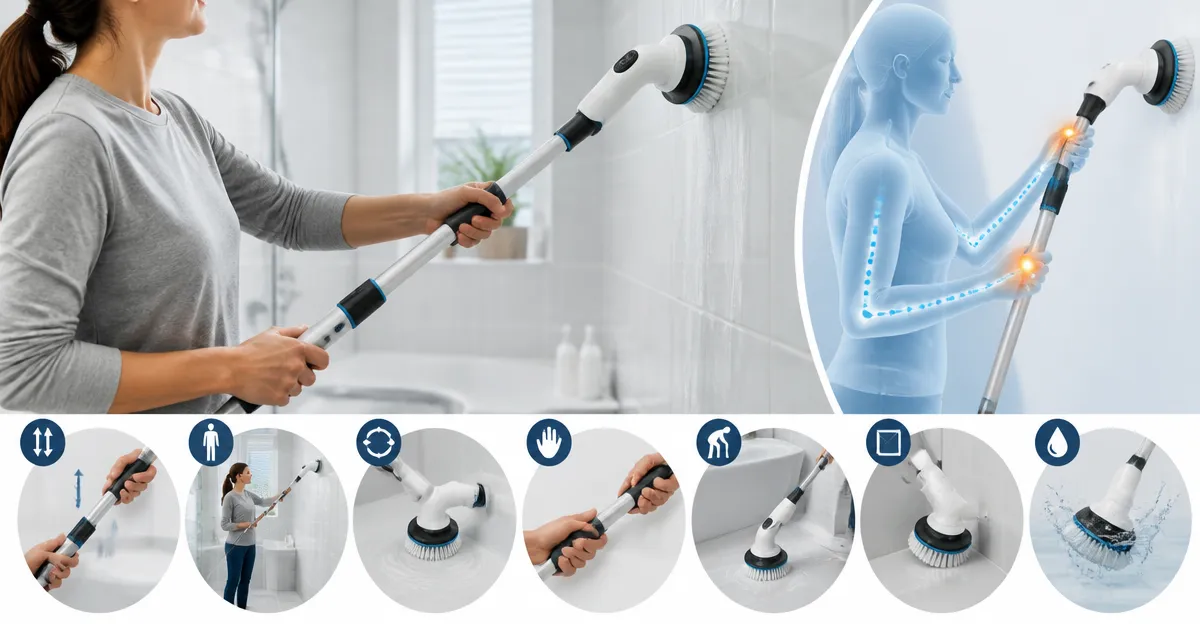
Most modern spin scrubbers feature an extendable handle that can be set to three or more lengths. The Highyes model offers 12, 43, and 54‑inch settings, enabling the user to stand upright while cleaning high shower walls, thus preventing forward bending that stresses the wrist.
The YKYI Cordless Spin Scrubber’s handle extends from 12 to 43.3 inches and can be detached for tight corners, providing flexibility for both tall and low surfaces. Adjust the handle before turning the device on to avoid readjusting mid‑task, which can cause sudden wrist twists.
For users with limited reach, the Rubbermaid Reveal Power Scrubber Kit includes an XL head that attaches to a powered handle, offering extra leverage without the need for a long pole. However, the handle itself is not telescopic, so it is best suited for countertop or sink work where height is not a concern.
Step 4: Choose the Correct Speed Setting
Spin scrubbers typically provide two speed options. Low speed (around 330–350 RPM) is ideal for gentle surfaces such as glass, acrylic shower walls, and polished stone; it allows a smooth motion that does not require the wrist to compensate for vibration.
High speed (up to 480 RPM) excels at removing stubborn soap scum, grease, and dried paint. The YKYI Cordless Spin Scrubber reaches 480 RPM, while the WKY model offers 450 RPM. When using high speed, keep the wrist in a neutral position and let the motor do the work; avoid forcing the brush into the surface, as this defeats the ergonomic benefit.
Battery life varies with speed. The Highyes unit provides up to 90 minutes on a full charge, while the YKYI offers 100 minutes. Selecting the appropriate speed for the task conserves power and reduces the need for frequent recharging, which can interrupt workflow and cause repetitive wrist movements when swapping batteries.
Step 5: Adopt an Ergonomic Grip
Hold the scrubber with a relaxed, neutral wrist angle. The handle should rest lightly against the palm, allowing the fingers to guide rather than crush the device. Many users report that a slightly wider grip reduces strain; the rubberized handle on the WKY Cordless Spin Scrubber offers a comfortable surface that prevents slipping.
If the handle feels too thin, consider wrapping a thin foam sleeve around it; this minor adjustment distributes pressure evenly across the hand. The Highyes model’s ergonomic design already incorporates a contoured grip that aligns the wrist in a straight line with the forearm, minimizing pronation.
When cleaning overhead areas, keep the elbow close to the body and use the extended handle as a lever rather than raising the arm overhead. This technique reduces shoulder elevation and keeps the wrist in a stable, low‑stress position.
Step 6: Execute Controlled, Small‑Arc Motions
Instead of large sweeping circles, move the brush head in short, overlapping arcs. This approach limits the range of motion required from the wrist and leverages the motor’s rotation to cover the surface. For grout lines, use the narrow brush head and guide it with a gentle rocking motion, allowing the bristles to do the scrubbing.
Maintain a steady pace; rapid jerking can cause the wrist to overextend and may damage the brush head. The LED battery display on the WKY and TUYU models provides real‑time feedback on speed and remaining power, helping the user maintain consistent motion without unnecessary adjustments.
When transitioning from one surface to another, pause briefly to reassess handle length and brush head selection. This pause prevents the habit of forcing the device into an unsuitable angle, which is a common cause of wrist discomfort.
Step 7: Clean, Rinse, and Store the Tool Properly
After each cleaning session, detach the brush head and rinse it under running water. All models reviewed are IPX7 waterproof, meaning the motor housing can be wiped clean, but the main unit should not be fully submerged.
Dry the handle with a soft cloth and store it in an upright position to avoid bending the telescopic pole. The Rubbermaid Reveal Power Scrubber Kit includes a storage case, while the Highyes and YKYI models come with a mesh bag for easy organization.
Charge the battery using the supplied USB‑C cable (Highyes, TUYU, WKY) or Type‑C fast charger (YKYI). A fully charged battery ensures the next session begins with the device ready, eliminating the need for rushed, awkward positioning while searching for a power outlet.
Tips & Pro Tips
- Warm water mixed with a mild detergent reduces the effort required to break down grime, allowing the low‑speed setting to be effective.
- For stubborn tile grout, apply a paste of baking soda and vinegar, let it sit for five minutes, then use the narrow brush head on low speed.
- When cleaning car wheels, select the high‑torque WKY Cordless Spin Scrubber; its 42 in‑lbs torque prevents stalling, which otherwise forces the user to apply extra force.
- Periodically check the LED battery indicator; operating the device with a low battery can cause the motor to vibrate more, increasing wrist fatigue.
- Use protective gloves with a textured surface for extra grip, especially when the handle becomes wet.
Troubleshooting
| Problem | Possible Cause | Solution |
|---|---|---|
| Brush head does not spin | Battery depleted or loose connection | Charge the device fully; ensure the brush head is securely locked onto the shaft. |
| Excessive vibration | Worn brush bristles or uneven surface | Replace the brush head; use the appropriate head for the surface. |
| Reduced speed under load | Insufficient torque (common in low‑torque models) | Switch to a high‑torque model such as WKY Cordless Spin Scrubber. |
Conclusion
By following the seven steps outlined above, one can operate a spin scrubber with minimal wrist strain while achieving a high level of cleanliness. Proper preparation, correct brush head selection, handle adjustment, speed control, ergonomic grip, controlled motion, and diligent maintenance together create a safe and efficient cleaning routine. Readers are encouraged to apply these techniques in daily chores and experience the reduction in fatigue that professional‑grade tools provide.
Products Mentioned in This Guide
Frequently Asked Questions
What is the best way to hold a spin scrubber to avoid wrist strain?
Grip the handle with a relaxed, neutral wrist, keep the elbow close to the body, and let the motor do the work rather than twisting your hand.
How often should I change brush heads on a spin scrubber?
Replace or rotate brush heads every 3-6 months, or sooner if bristles become frayed or lose elasticity.
Can I use a spin scrubber with batteries instead of a charger?
Yes, many models accept AA batteries; ensure you have fresh batteries and check the battery compartment for proper orientation.
Do I need protective gloves when using a spin scrubber?
Gloves are optional but provide extra grip and protect hands from cleaning chemicals and sharp debris.
How does preparing the workspace reduce wrist fatigue?
Clearing debris and obstacles lets you use smooth, controlled motions without over-reaching, keeping the wrist in a neutral position.